Project Repository
https://github.com/Lemonadeccc/GEN-3D-ASSESTS
In practical implementation, I encountered loading issues with obj / fbx / gltf. A Next.js proxy should not be used, and models or textures should not be loaded through blob. Other parts also need to consider real user workflows.
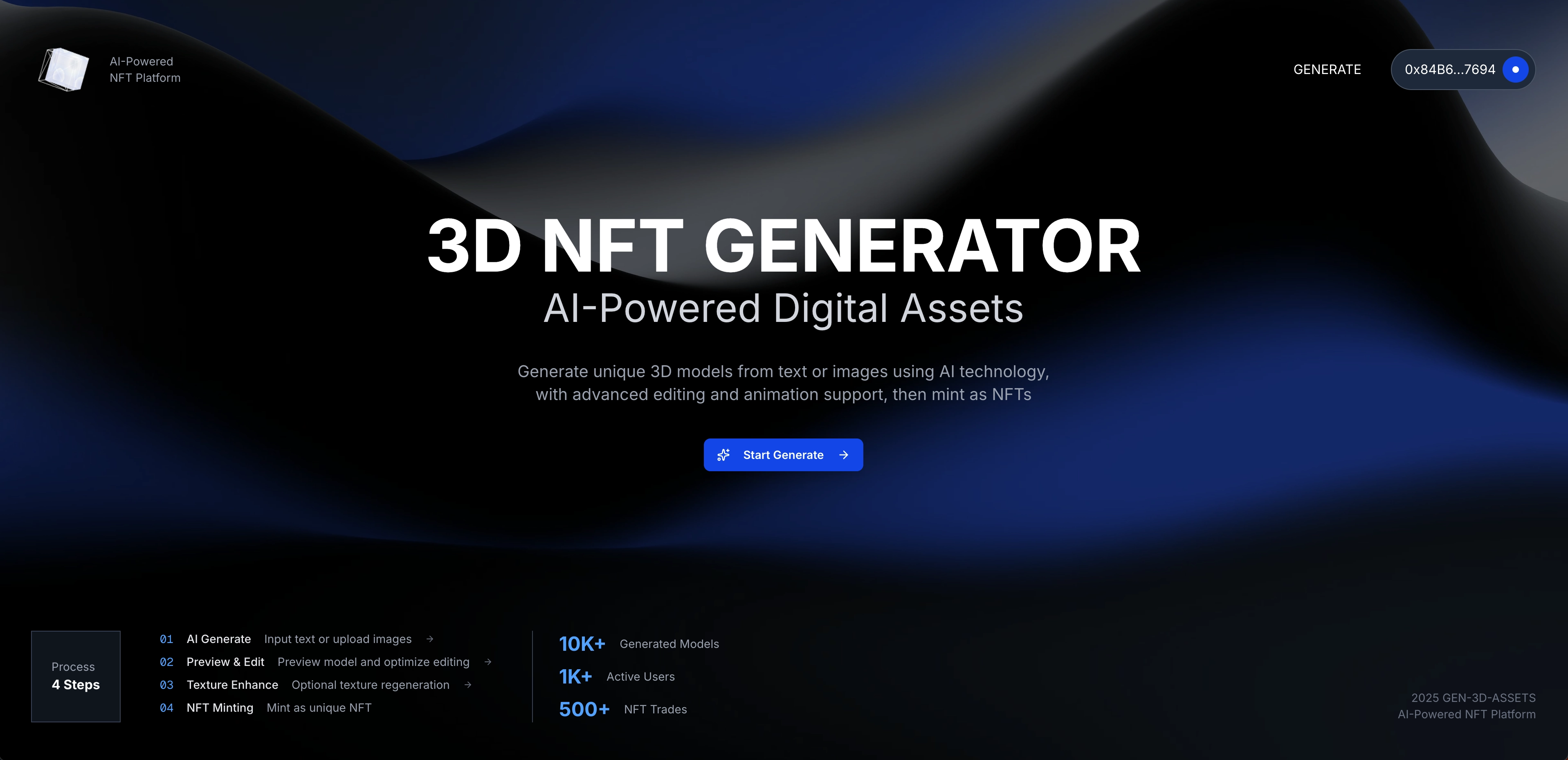
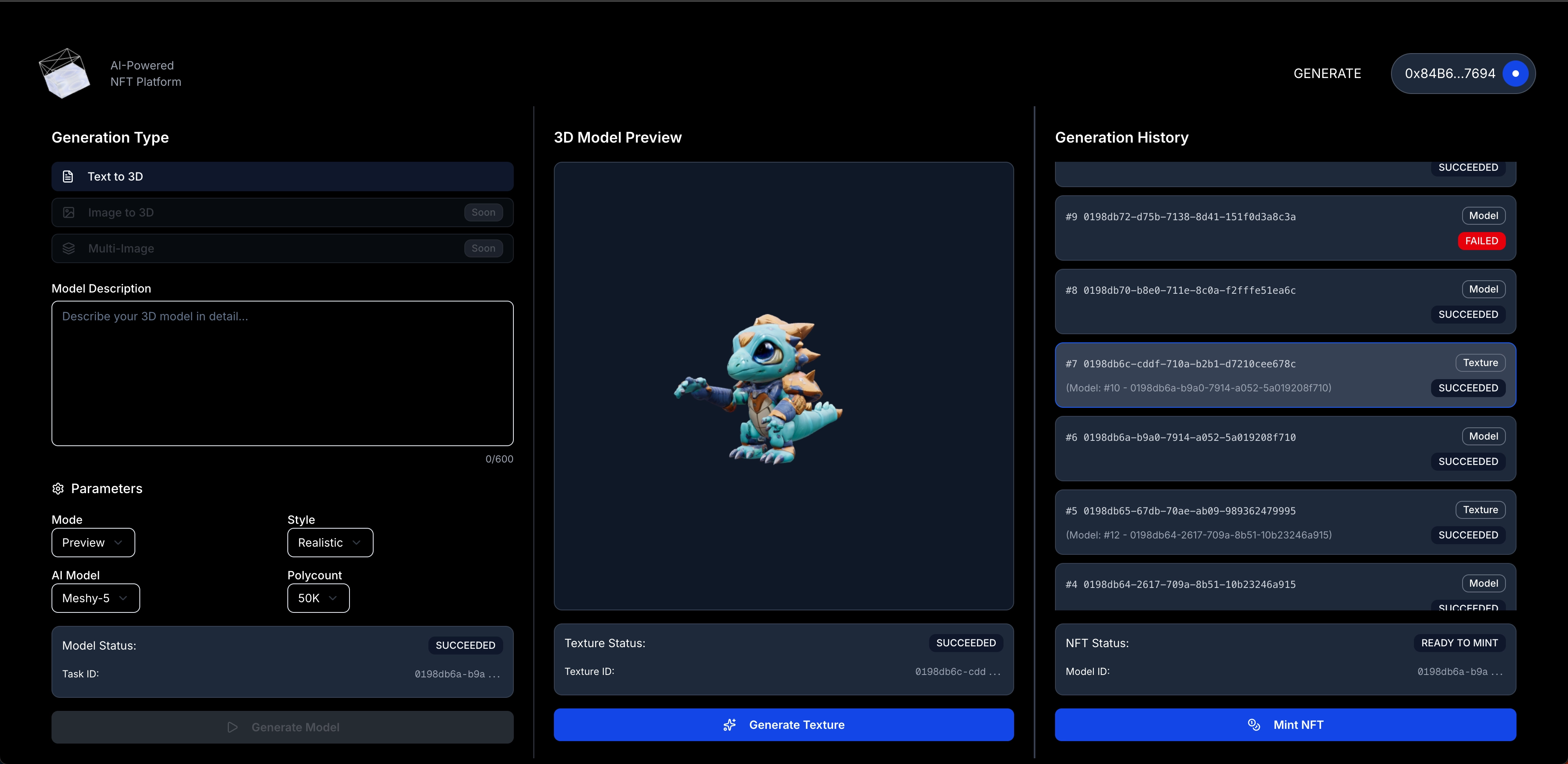
Page Preview
Ideas
Mainly using Next.js + R3F + deri? + solidity + Vercel.
Engineering
- Technology selection: evaluate contract stacks such as solidity/foundry/harhat. Technically, use Next.js SSR to render 3D models, which I had not used before. For short-term MVP, use CC and other tools for unit tests.
- Standardization with
commitlint/eslint/husky. - Use GitHub Actions for CI/CD, combine Qodo for PR review and AI-assisted management, use PockeFlow to generate repository docs, and deploy to Vercel according to Next.js and project requirements.
- Performance may become tight when loading many 3D models. Optimize by making full use of API request/response loading time, SSR, and Turbopack incremental updates.
- Optimize GSAP animations and static assets.
Business Flow
- Use
meshy.aior other generative APIs for 3D generation.- Apply for API access; decide whether to use polling or user-configurable strategies during usage.
- Decide where API configuration should be stored and how to keep keys secure from abuse.
- Request the API based on prompts. Decide whether to download models before display or show directly. Waiting animations should be polished and interesting. Returned data/models should be selectable, and models should support
autoRotateduring display. - After selection, request contracts to put assets on-chain.
- Deployment needs to be coupled with engineering considerations.
Value
- Provide NFT-like personal assets: generate personalized non-fungible 3D assets based on user profile traits and prompt preferences.